What is digital marketing? 40% better ROI for small business


Many small business owners think digital marketing means just posting on social media, but it actually encompasses a broader set of powerful tools that can drive measurable business growth. The reality is that what digital marketing encompasses includes search engines, email campaigns, paid advertising, and your website working together. This guide breaks down each component, corrects common misconceptions, and shows you how to build a strategy that increases visibility and customer engagement.
Table of Contents
Key takeaways
Point | Details |
Digital marketing uses multiple online channels | Search, email, social media, and paid ads work together to increase visibility and sales. |
Each channel serves a unique purpose | SEO drives organic traffic, email delivers high ROI, paid search converts quickly, and social media builds engagement. |
Data analytics improves campaign performance | Measurement tools enable real-time adjustments and can improve ROI by up to 40%. |
Common misconceptions waste resources | Overreliance on social media or expecting instant results leads to poor budget allocation. |
Strategic frameworks guide planning | The PESO model helps small businesses organise paid, earned, shared, and owned media effectively. |
Introduction to digital marketing
Digital marketing is the use of online channels to connect with customers, build awareness, and drive sales. For small businesses, these channels include search engines, social media platforms, email lists, websites, and online advertising. Over 90% of small businesses see increased visibility when they adopt digital marketing tactics, making it essential rather than optional in 2026.
What sets digital marketing apart from traditional methods is its interactive nature and data-driven approach. You can track exactly how many people see your message, click your links, and make purchases. Traditional marketing like print ads or billboards offers limited feedback and measurement.
To get started, you need a few foundational elements:
A business website that clearly explains your services
Basic internet literacy and willingness to learn new tools
An email address to communicate with customers
Understanding of your target audience and their online behaviour
The importance of digital marketing grows each year as more consumers research and buy online. Small businesses that ignore digital channels lose market share to competitors who maintain active online presences. The good news is that you can start with modest budgets and scale as you see results.
Core components and channels of digital marketing
Digital marketing consists of several distinct channels, each serving specific purposes in your overall strategy. Understanding their unique strengths helps you allocate budget wisely and set realistic expectations.
Search engine optimisation builds organic visibility over time. SEO drives 53% of website traffic and remains essential for long-term growth. You create valuable content, optimise your website structure, and earn links from other sites to rank higher in Google results.
Email marketing delivers exceptional return on investment. Studies show email yields $36 return per $1 spent, making it one of the most cost-effective channels available. You build a subscriber list, send targeted messages, and nurture relationships that convert to sales.
Paid search advertising provides faster results than SEO but requires ongoing budget. When targeted properly, paid ads convert two to three times higher than some other channels. You bid on keywords, write compelling ad copy, and send traffic to optimised landing pages.
Social media excels at building community and engagement but generates less direct sales than many assume. Less than 15% of online sales come from social media alone. It works best for brand awareness, customer service, and nurturing relationships that eventually lead to purchases through other channels.
Channel | Primary Benefit | Typical Timeline | Best For |
SEO | Organic traffic | 3-6 months | Long-term visibility |
High ROI | Immediate | Nurturing leads | |
Paid Search | Fast conversions | Days to weeks | Quick results |
Social Media | Engagement | Ongoing | Brand building |
Pro Tip: Combine multiple channels rather than relying on just one. A digital marketing plan that integrates SEO, email, and paid search typically outperforms single-channel approaches. Start with essential marketing tools that fit your budget and scale as you learn what works.
The role of data and analytics in digital marketing
Data transforms digital marketing from guesswork into science. You track exactly which campaigns generate sales, which channels waste budget, and which messages resonate with your audience. This precision allows small businesses to compete effectively against larger competitors.
Analytics tools enable several critical capabilities:
Precise audience targeting based on demographics, interests, and online behaviour
Real-time campaign adjustments when performance drops or opportunities emerge
Budget optimisation by shifting spend toward high-performing channels
Customised messaging that speaks directly to specific customer segments
Reduced wasted spend on ineffective tactics
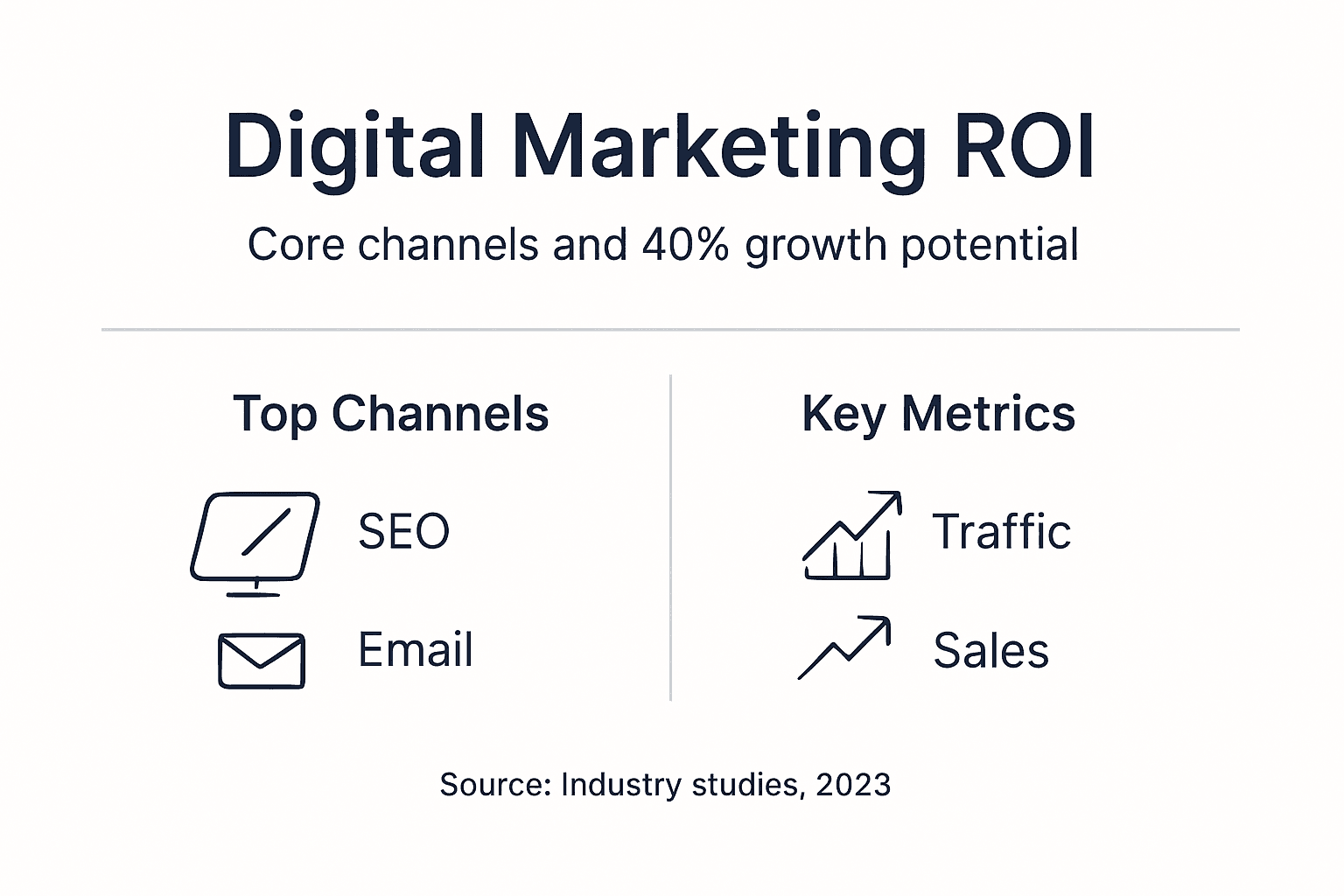
The financial impact is substantial. Research indicates data analytics can improve ROI by up to 40% compared to campaigns run without measurement. You identify which keywords drive qualified traffic, which email subject lines generate opens, and which ad creative converts best.
Good data management starts with clear goals. Define what success looks like before launching campaigns, whether that’s website visits, email signups, phone calls, or online purchases. Then implement tracking to measure progress toward those specific outcomes.
Pro Tip: Use free tools like Google Analytics to start collecting actionable insights. You don’t need expensive enterprise software to track website visitors, traffic sources, and conversion rates. These basics provide enough information to make smarter decisions and improve results over time.
Small businesses benefit most from continuous learning and adaptation. Review your data weekly, test new approaches monthly, and refine your strategy quarterly. The social media ROI examples from successful companies show how iterative improvement compounds into significant gains.
Common misconceptions about digital marketing
Several widespread misunderstandings cause small businesses to waste resources and set unrealistic expectations. Correcting these false beliefs helps you allocate budget wisely and maintain motivation through the learning process.
Digital marketing is just social media promotion. This narrow view ignores search engine optimisation, email campaigns, paid advertising, and content marketing. Social media represents one channel among many, and it directly accounts for less than 15% of online sales for most businesses. A balanced approach using multiple channels generates better results.
Results are immediate and guaranteed. Unlike flipping a light switch, digital marketing requires time to build momentum. SEO efforts typically take three to six months to show meaningful traffic increases. Email lists need time to grow before generating substantial revenue. Paid advertising can work faster but still requires testing and optimisation to become profitable.
You can set it and forget it. Successful digital marketing demands ongoing attention and adjustment. Consumer behaviour changes, competitors adapt their tactics, and platform algorithms evolve. What worked last quarter may underperform this quarter without updates.
More content always means better results. Quality matters far more than quantity. Publishing ten mediocre blog posts generates less value than creating one exceptional resource that answers customer questions comprehensively. Consistent, valuable content creation boosts organic traffic by up to 70% over time, but only when that content genuinely helps your audience.
Understanding these realities prevents common pitfalls like abandoning strategies too early or overinvesting in single channels. The marketing misconceptions guide explores additional false beliefs that derail small business success.
Digital marketing frameworks for small business strategic planning
The PESO model provides a practical structure for organising your digital marketing efforts and budget. PESO divides channels into four categories: Paid, Earned, Shared, and Owned media. This framework helps you balance investments across channel types rather than putting all resources into one area.
Media Type | Definition | Examples | Primary Benefit |
Paid | You pay for exposure | Google Ads, Facebook ads, sponsored content | Immediate visibility and control |
Earned | Others mention you | Press coverage, reviews, backlinks | Credibility and trust |
Shared | Social distribution | Social media posts, user-generated content | Engagement and reach |
Owned | You control the asset | Website, blog, email list | Long-term value and independence |
Paid media delivers quick results but stops working when you stop paying. Earned media builds credibility but remains difficult to control. Shared media extends your reach through social networks but depends on platform algorithms. Owned media provides the foundation you control completely.
The most effective strategies integrate all four types:
Use owned media like your website and blog as the content hub
Amplify reach through shared social media distribution
Accelerate growth with paid advertising when budget allows
Build credibility through earned media mentions and reviews
A digital marketing plan based on PESO ensures you don’t over-rely on any single channel. If a social platform changes its algorithm or a paid channel becomes too expensive, you maintain presence through other media types.
The framework also clarifies decision making. When evaluating new marketing opportunities, ask which PESO category it fits and whether that category needs more investment. This prevents shiny object syndrome where you chase every new tactic without strategic consideration.
Practical applications and case studies
Real-world examples demonstrate how multi-channel digital marketing strategies deliver measurable improvements for small businesses. Research shows that coordinated campaigns across multiple channels can boost customer retention by 25% compared to single-channel approaches.
A local service business might combine these tactics:
SEO-optimised website with service area pages targeting local searches
Email newsletter sharing maintenance tips and seasonal promotions
Google Ads campaigns for high-intent keywords when capacity allows
Social media showcasing completed projects and customer testimonials
This integration works because each channel reinforces the others. Someone discovers you through search, signs up for your email list, sees your social posts, and finally converts after a remarketing ad. The touchpoints build familiarity and trust that single-channel marketing cannot achieve.
The key insight from successful implementations is coordination rather than isolation. Your email content should reference your blog posts. Your social media should drive traffic to your website. Your paid ads should align with your organic messaging. This consistency improves recognition and conversion rates.
Practical tips to start a multi-channel approach:
Begin with owned media by creating a solid website foundation
Add one new channel every quarter rather than launching everything simultaneously
Repurpose content across channels to maximise efficiency
Track which channel combinations produce the highest conversion rates
Focus on channels where your specific audience spends time
The multi-channel case studies from various industries show patterns of success. Businesses that maintain consistent presence across three to four channels typically outperform those using one or two channels, even with smaller individual channel budgets.
Measuring success and next steps for small businesses
Knowing what to measure determines whether your digital marketing efforts succeed or waste resources. Focus on metrics that directly connect to business outcomes rather than vanity numbers that look impressive but don’t drive revenue.
Critical metrics to track include:
Website traffic sources to understand which channels deliver visitors
Conversion rates showing the percentage of visitors who become customers
Return on investment comparing revenue generated to marketing spend
Customer acquisition cost revealing how much you pay for each new customer
Lifetime value indicating total revenue from average customer relationships
Implementing a digital marketing strategy follows a logical sequence:
Define specific goals like increasing website traffic by 50% or generating 20 qualified leads monthly.
Build foundational assets including a professional website and basic content that explains your services.
Choose two to three channels that align with where your customers spend time online.
Implement analytics tracking to measure progress toward your defined goals.
Review performance monthly and adjust tactics based on what the data reveals.
Expand to additional channels once you achieve consistent results from initial efforts.
Pro Tip: Start small with a website, email list, and basic SEO rather than trying to master every channel simultaneously. This focused approach lets you build competence and see results before spreading resources too thin.
Realistic expectations prevent frustration during the learning phase. Most small businesses need three to six months to see meaningful results from organic channels like SEO and content marketing. Paid channels work faster but require budget and optimisation to become profitable.
The measuring marketing success guide provides detailed frameworks for tracking what matters. Remember that digital marketing rewards patience and continuous improvement rather than overnight transformation.
Boost your small business with expert digital marketing support
Understanding digital marketing concepts provides the foundation, but implementing effective strategies requires ongoing effort and expertise. You now know that successful campaigns integrate multiple channels, rely on data-driven decisions, and require patience to build momentum.
M50 Media specialises in helping small businesses navigate the complexities of digital marketing without the overwhelm. Whether you need a comprehensive digital marketing plan guide or personalised direction, expert support accelerates your progress and prevents costly mistakes.
Our coaching services for small businesses provide the strategic guidance you need to implement what you’ve learnt today. We help you prioritise channels, allocate budget effectively, and build systems that generate consistent results. If you’re ready to take action but unsure where to start, schedule a free marketing SOS call to discuss your specific situation and explore solutions that fit your goals and resources.
Frequently asked questions
What basic tools do I need to start digital marketing?
You need a professional website, email marketing platform, and Google Analytics for tracking. These three tools provide the foundation for most digital marketing activities. Free options exist for all three, letting you start without significant investment. As you grow, add tools for social media scheduling, search engine optimisation, and customer relationship management.
How long until I see results from digital marketing?
Organic channels like SEO typically require three to six months before generating significant traffic and leads. Email marketing can produce results within weeks once you build a subscriber list. Paid advertising delivers the fastest results, often within days, but requires ongoing budget and optimisation. Patience and consistency matter more than any single tactic.
Which digital marketing channel is best for a limited budget?
Email marketing offers the highest return on investment at $36 for every $1 spent, making it ideal for tight budgets. Start by collecting email addresses from website visitors and existing customers. Combine email with basic SEO by creating helpful content that answers customer questions. These two channels require more time than money and build valuable long-term assets.
Can I handle digital marketing myself or should I hire help?
You can start with foundational tactics like website optimisation and email marketing yourself using free resources and tools. As your business grows and marketing becomes more complex, consider hiring specialists for technical areas like paid advertising or advanced SEO. Many small businesses use a hybrid approach, handling basic tasks internally while outsourcing specialised work.
Recommended
Comments